Showing posts with label asian women in cooperative development forum. Show all posts

Sunday, August 17, 2014

Co-op trainers training on gender this September

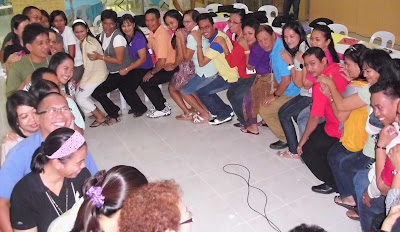
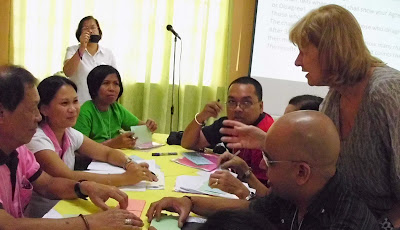
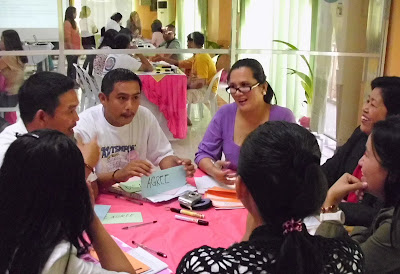
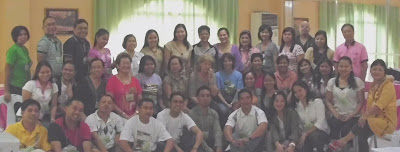
The Asian Women in Co-operative Development Forum (AWCF) will hold the "Training of Trainers (TOT) on Gender for Co-operatives" on September 2-5, 2014 in the Philippines. Venue is the Great Eastern Hotel in Quezon Avenue, Quezon City. This TOT is for members of co-ops' Gender Committee and Education Committee; Gender Focal Persons; human resource staff; and trainers who will handle gender education in co-ops.

Interested co-operators can contact the Manila-based AWCF Secretariat for this training and other gender equality-related concerns. E-mail: 
gadsummit@coopwomen.org or gender.coop@yahoo.com. Mobile: 09178436390 or 09174579228.


-----------
WHY GENDER IN CO-OPS?--A Backgrounder

Co-operatives, being both social and economic enterprise, have a role to play in ensuring that the benefits gained from co-operation are equally shared by women and men members. This is warranted in two of the "Seven Principles of Co-operatives": under Principle 1) Voluntary and Open Membership,  and Principle 2) Democratic Member Control. In the Philippines, the Implementing Rules and Regulations (IRR) of the New Co-op Law, Rule 11, Section 5 on Social Audit of Co-ops also requires organizations to show activities and programs on their contribution to the promotion of gender-fair culture and practices.

On November  18,  2013,  the  Philippines's Cooperative  Development  Authority  (CDA)  issued Memorandum Circular (MC) 2013-22 “Guidelines on Mainstreaming Gender and Development  (GAD) in Cooperatives" (http://cda.gov.ph/images/Issuances/MCs/MC2013-22-Guidelines-on-mainstreaming-GAD-in-coops.pdf). This MC on GAD aims at disseminating to the co-op sector the GAD mandate of the Philippine government so as to ensure the promotion of gender equality (GE) and the institutionalization of GAD in policies,  programs,  and other activities in co-ops.  Since co-operatives are the key development players in rural communities, GAD is important to co-ops’ sustainability.

GAD efforts of co-ops enable them to integrate GE that leads, in turn, to even more economic and social growth in the  co-ops because:
  • with GE, co-ops give attention to the needs and contributions of both women and  men members, and
  • equal opportunities given to both women and men help strengthen even more the co-ops and communities.

>National summit on GAD was held
In March 2014, the Philippines's "National Summit on GAD in Co-ops" was held in Subic Bay, Philippines, organized by the CDA and AWCF.  It was attended by 568 delegates from 429 co-op organizations. A "Declaration and Call for Action" of the National Summit  was crafted by the participants, which contained the co-ops' concerns and recommendations/resolutions about GE, and the co-ops' commitments in  bringing about and strengthening GAD in co-ops. The Declaration and Call for Action emphasized the mainstreaming GAD in the co-ops to bring gender perspective to all aspects of the co-op policy, development plans and activities, budget, mechanisms and instruments through buildinggender  capacity  and  accountability.


>TOT on gender for co-ops is made available
The TOT on gender to be held by AWCF is part of the GAD mainstreaming activities of co-ops. Co-ops need to:
  • capacitate people to support the continuing GE education of the co-op members, officers, and staff
  • update and enhance skills customized to the functions of the co-ops' Gender Committee and Education Committees; Gender Focal Persons; human resource staff; and trainers
There is the need to integrate gender in the co-operatives' education program and even in the human resource development program. Therefore, the TOT on gender for co-ops will aim to provide understanding on the basic concepts of GE and its importance to the kind of work that co-ops and other organizations do to inspire change for women and men--for the development of the co-ops.

Recognizing that there is still much work to be done in raising the GE awareness of both women and men in co-ops, AWCF will conduct this TOT on Gender for Co-ops to help trainers and advocates enhance their skills specifically in handling gender education.


As a Asian regional organization on gender and co-op development, AWCF works in and through co-ops in the region. Among its programs that had been implemented recently were capacity-building on gender for a number of Philippine co-operatives that have now become gender-fair and gender-sensitive organizations that enjoy the economic and social benefits of GE (see AWCF website http://coopwomen.org). 

Wednesday, February 26, 2014

Philippine co-ops hold summit on gender and development

The Philippines's “National Summit on Gender and Development (GAD) in Co-ops,” themed "Inspiring Change for Women and Men in Co-ops,” will happen on March 25-26, 2014, Subic Bay, PH. 

This is the first time that the country's co-ops will hold a summit to tackle gender GAD. Participants in the Summit will get informed of GAD's important role in co-op growth and development, and how co-ops can meet the requirements of the memorandum circular on GAD mainstreaming in co-ops. The memorandum circular was issued in November 2013 by the PH government's Cooperative Development Authority (CDA). 

The national GAD Summit is being organized by the Asian Women in Co-operative Development Forum (AWCF) at CDA. Get more details from coopwomen.org and cda.gov.ph, or send an e-mail to gadsummit@coopwomen.org 

The Summit brochure/invitation is available here

Tuesday, February 11, 2014

Philippines holds national summit on gender and development in co-ops

Announcing: The National Summit on Gender and Development (GAD) in Co-ops, themed Inspiring Change for Women and Men in Co-ops
WHEN: March 25-26, 2014
WHERE: Subic Bay Travelers Hotel and Event Center, Subic Bay Freeport Zone, Philippines.
This National Summit for Philippine co-operatives is the first of its kind to be held in the country.  


http://coopwomen.org/downloads/summitbroch21k_upload_final.pdf (downloadable Summit brochure/invitation)

•    Summit Participants: Co-operators who want to enable change and make change work for the continuous development of Philippine co-operatives—Board of Directors; General Managers/Chief Executive Officers; Gender Focal Persons; Human Resource Officers; and Education Committee members.
 
•    Summit Organizers: Asian Women in Co-operative Development Forum (AWCF) and Cooperative Development Authority (CDA)
AWCF (www.coopwomen.org) is a resource center and advocacy body on gender and co-op development. Since 1990, AWCF’s activities in the Philippines and five other Asian countries have aimed at helping support co-operative growth through the advocacy and practice of GE in co-ops. 

CDA (www.cda.gov.ph) is the lead Philippine government agency tasked for co-op development. As a government body, it is mandated to practice gender equality (GE) tenets and, furthermore, it actually believes that GE is good for co-ops’ growth. With this belief, CDA actively implements activities to help bring GE to the consciousness, operations, and systems of co-ops.

•    Summit Objectives:

To let the participants—
1)    Know the importance of gender and development (GAD) that leads to the integration of GE in co-ops and, ultimately, to greater co-op growth and development—economically and socially.
2)    Know how co-ops can comply with the requirements of Memorandum Circular (MC) 2013-22, pertaining to “Guidelines on Mainstreaming GAD in Cooperatives.” On November 18, 2013, CDA issued MC 2013-22 that aims at disseminating to the co-op sector the GAD mandate of the Philippine government so as to ensure the promotion of GE and the institutionalization of GAD in policies, programs, and other activities in co-ops.
3)    Be inspired by the sharing in the Summit by key organizations and resource persons, and join other co-ops in helping other co-ops nationwide in becoming even better and stronger co-ops.

•    The holding of the National Summit on GAD in Co-ops comes at an opportune time:
The Summit comes on the heels of CDA’s issuance of MC 2013-22 (Guidelines on Mainstreaming GAD in Cooperatives). The MC is a solid action of CDA for its GAD mandate as a government agency, aside from its already ongoing GAD activities in its Central and regional offices. The MC is also CDA’s positive response to a Call for Action issued in December 2012 to CDA by gender-fair Philippine co-operatives.

These gender-fair co-ops had urged CDA to support GE mainstreaming and integration in the co-ops to bring about even greater economic and social benefits to the movement. Setting themselves as examples, these gender-fair co-ops had put forward that co-ops practicing GE—
1) recognize that women and men have equal rights, benefits, opportunities for advancement, services, and access to and control over resources; and have equal roles to play in development as participants and as leaders; and
2) know GE’s important contribution in enabling co-ops to perform their dual economic and social role in development.

Gender-fair co-ops are gender-fair workplaces. Gender-fair co-ops enjoy even more economic and social benefits that GE brings forth to co-ops and their members.

The Summit is also being held during the celebration of “Women’s Month.”

For inquiries on the GAD National Summit, please contact (mobile) 0917-8436390 (Globe) or 0922-4685546 (Sun); (landline) (02) 438-7666 (Philippines).

Interested Philippine co-ops, hurry and register now! The two-page National Summit brochure/invitation is available for downloading and printing on the link below.

Click here to download the "National Summit on GAD in Co-ops" brochure/invitation

Wednesday, December 11, 2013

Gender Equality Resource Centers in Philippine co-ops fully activated

Gender Equality Resource Centers (GERCs) based in Philippine co-operatives in the Luzon, Visayas, and Mindanao regions are now fully activated. The GERCs are ready to serve the country’s other co-ops and help them fulfill their objectives and needs related to gender and development (GAD) and genderequality (GE).

On November 21-24, 2013, co-operators from Luzon, Visayas, and Mindanao regions of the Philippines converged for a meeting and workshop in San Rafael, Bulacan province in Luzon for their continuing capacity-building toward effective and timely service delivery to other co-ops and different institutions. These co-operators belong to different co-ops that comprise GERCs in the aforementioned regions. These co-ops, which are among the most active and most progressive co-ops in the country, have become gender-fair and gender-sensitive organizations that recognize and advocate the socio-economic benefits that co-ops and their members enjoy when they embrace GE. Furthermore, these co-ops that had formed their own GERCs have banded together to operate GERCs at the regional level, mainly to help even more effectively other co-ops and institutions in enjoying the benefits of being gender-fair organizations.

The GERCs were set up under the auspices of the Project “Sustaining Gender Equality Among Co-operatives in the Philippines” that is implemented in 2013 by the Asian Women in Co-operative Development Forum (AWCF). The Project is supported by the We Effect—Swedish Cooperative Centre (We Effect—SCC), with fund support from the Swedish International Development Cooperation Agency (SIDA). In the years immediately prior to this Project, AWCF, also with We Effect—SCC’s support, implemented the “first” project “Promoting Gender Equality Among Co-operatives in the Philippines.” This first project likewise involved other co-ops that are now part of the regional GERCs formedby the co-ops through the current AWCF-We Effect—SCC Project.

The first project (implemented 2010-2012) culminated in the “AWCF Public Awareness Conference” held December 6, 2012 in Quezon City, Philippines, wherein 15 co-ops participating in the project drafted the document "Call for Action to the Cooperative Development Authority (CDA) tosupport Gender Equality in Philippine co-ops." The original copy of the Call for Action, which was signed by the 15 co-ops’ representatives, was submitted by the co-ops at the Conference to CDA Executive Director Mr. Niel Santillan. He was one of the Conference’s guests. On January 2, 2013, AWCF sent a copy of the same Call for Action to the office of CDA Chairperson Mr. Emmanual Santiaguel.


The Call for Action
In the said Call for Action, the 15 co-ops that took part in the AWCF GE Project from 2010-2012 stated, among other things, that they realize that as gender-fair co-ops, they may serve as role-models for other co-ops and co-operators on the benefits of being gender-aware and gender-sensitive, and of practicing GE. In consideration of this premise and other premises stated in the said Call for Action, the 15 co-ops said that they are therefore making the call and the challenge to the CDA—being the most relevant government agency supporting co-ops in the country—to support GE mainstreaming and integration in the co-ops to bring about even greater socio-economic benefits to the movement.
Specifically, the 15 co-ops called on the CDA to:
1. Require gender-sensitivity training or gender-awareness sessions as one of the courses for co-op officers and key management staff
2. Require co-ops to engage in gender-related activities so as to address gender issues in their co-ops and thus become gender-fair and gender-responsive organizations and workplaces
3. Require co-ops to integrate GE in their bylaws.

These aforementioned actions, as stated in the Call for Action, will lead co-ops in the country to make GE as one of their priority/primary actions. Thisway, the co-ops will be compliance with the Rules and Policies Implementing Certain Provisions of the “Philippine Cooperative Code of 2008,” Rule 11Section 5, “Social Audit of Cooperatives.” 

The 15 co-ops closed the Call for Action document by strongly urging the CDA’s “favorable response to the Call for Action beginning 2013.”


Next steps after Call for Action; Circular issued
After the Call for Action was submitted to the CDA Executive Director in December 2012 in the Public Awareness Conference and sent by AWCF to the CDA Chairperson in January 2013, AWCF worked with CDA for almost all of the latter part of the year to follow up, coordinate and advocate with, and provide technical support to CDA in responding to the Call for Action for GE in co-ops. AWCF Executive Director Ms Salome Ganibe led her office's efforts in coordinating with CDA. (See related article)


With the support of CDA Chairperson Mr. Santiaguel, the key officers (led by Ms Mercedes Castillo, one of the CDA Board of Administrators or BOA) and management staff in CDA’s Central Office and field offices gave also their support to the Call for Action and translated that support to activities (technical working group meetings between AWCF and CDA; gender awareness sessions with CDA officers and staff, and co-ops in attendance; and other discussions). All these activities ultimately led to the drafting and  subsequent approval in November 18, 2013 by the CDA's BOA of Memorandum Circular (MC) 2013-22, pertaining to "Guidelines on Mainstreaming Gender and Development (GAD) inCooperatives." The Circular aims at disseminating to the co-op sector in the Philippines theGAD mandate of government, and therefore ensure the promotion of GE and institutionalization of GAD in policies, programs, and other activities of co-ops.


The pursuance of GAD and GE in Philippine co-ops is not a new undertaking, as the seed of gender awareness was planted in the co-op movement in the late 1980s to early 1990s. Co-ops that had embraced GE have been enjoying so far the advantages to their organizations and women and men members of being gender-fair. But, until now, GE efforts have reached a limited number of co-ops and also have achieved a limited quantity and quality of outputs mainly because of the still prevailing gender issues in society that had found their way into co-op structures. These are gender issues that co-ops have to recognize and address with commitment and passion if they believe that GE is a great way to achieve even greater co-op sustainability. And to attain this objective, co-ops need the support and assistance of gender advocates/resource persons in the co-op movement, and the support of government toward achieving GAD and GE.

AWCF and the GERCs thus view CDA’s issuance of the GAD Circular that leads to GE in co-ops as one of the most important steps that will surely bring about the even greater sustainability of Philippine co-ops, in both social and economic fronts. There is no lack of data, proofs, and testimonies on how having GE in co-ops results to stronger, happier, and even more relevant organizations (increased membership, lowered delinquency, more services, etc.) and, subsequently, stronger and happier families that support their co-ops even more. 


Locating the GERCs in co-ops
The GERCs now operating in Luzon,Visayas, and Mindanao regions are based in the following co-operatives:
  
GERC Luzon:
-Abra Diocesan Teachers and EmployeesMulti-Purpose Cooperative (ADTEMPCO)
-Bulacan Federation of Cooperatives (BUFECO)
-Ligas Kooperatiba ng Bayan sa Pagpapaunlad (LKBP)
-Nueva Segovia Consortium of Cooperatives (NSCC)
-Sacred Heart Credit and Development Cooperative (SHCDC)
-St. Martin of Tours Credit and Development Cooperative (SMTCDC)
  • Contact persons

Ms Lani Babista  lani_babista@yahoo.com
Ms Divina Quemi (NSCC)  nsccvigan2@yahoo.com

 GERC Visayas:

-Cebu People’s Multi-Purpose Cooperative (CPMPC)
-Cordova Multi-Purpose Cooperative (CMC)
-Don Bosco Network Multi-Purpose Cooperative(DBNMPC)
-Dumanjug Multi-Purpose Cooperative (DMPC)
-Lamac Multi-Purpose Cooperative (LMPC)
-Mandaue City Public Market Vendors Multi-Purpose Cooperative (MAVENCO)
-Metro Ormoc Community Cooperative (OCCCI)
  • Contact person

Ms Edita Fernandez    Fernandezedita@yahoo.com


GERC MASS-SPECC:

   GERC MASS-SPECC is composed of the following co-op organizations—

-MASS-SPECC Cooperative Development Center (MASS-SPECC)
-Aurora Integrated Multi-Purpose Cooperative (AIM Coop)
-Bukidnon Employees Multi-Purpose Cooperative(BUGEMCO)
-Notre Dame of Marbel University Employees DevelopmentCooperative (NDMU Coop)
-Tagum Cooperative (TC)
-Zillovia Women’s Multi-Purpose Cooperative(ZWMPC) 
(Note:Primary co-ops above compose the MASS-SPECC Gender Equality Committee.)

Also in the GERC MASS-SPECC:
-Mindanao State University-Iligan Institute of Technology National Multi-Purpose Cooperative (MSU-IIT NMPC)
-Paglaum Multi-Purpose Cooperative (PMPC)
-Panabo Multi-Purpose Cooperative (Panabo MPC)
-Pantukan Chess Club Cooperative (PCCC)
  • Contact person

Ms Bernadette Toledo   nadettetoledo@yahoo.com.ph


More information on GAD, GE, the GERCs, and GERC AWCF can be obtained from the above-listed GERCs, and from emailing awcf@coopwomen.org

Friday, December 6, 2013

Philippine co-op office issues circular for gender and development

Of interest to Philippine co-ops:

The Philippine government's Cooperative Development Authority (CDA) has issued Memorandum Circular (MC) 2013-22, pertaining to "Guidelines on Mainstreaming Gender and Development (GAD) in Cooperatives." The CDA Board of Administrators (BOA), led by Chairperson Mr. Emmanuel Santiaguel, PhD,  approved the MC under Resolution Number 245, series of 2013 dated November 18, 2013. The approval was done in the BOA's regular meeting on the said date held at the CDA Central Office in Quezon City, Philippines, with the motion presented by CDA Administrator Ms Mercedes Castillo, seconded by CDA Administrator Mr. Pendatun Disimban, to approve the proposed guidelines pertaining to MC 2013-22. The MC is applicable to co-ops duly registered with the CDA.

Thursday, May 9, 2013

AWCF's training courses for co-ops and other organizations, 2013

The Asian Women in Co-operative Development Forum (AWCF) offers specialized gender-integrated training courses to benefit women and men. Here is the training program of AWCF for 2013, in the Philippines. For details on these training courses, please e-mail AWCF at awcf@coopwomen.org 

AWCF also welcomes inquiries from other Asian co-ops/organizations about its training courses. In the Philippines, AWCF is a Cooperative Development Authority (CDA)-Accredited Training Provider, with Accreditation Number CTPRO 070.


Tuesday, August 23, 2011

Experience of Ms Thali, exchange staff in AWCF-FK capacity-building project

In this video, Ms Natchamon Thali of the Credit Union League of Thailand (CULT), Thailand, shares her learning and experience from being an exchange staff assigned to the National Confederation of Cooperatives (NATCCO), Philippines, in 2008-2009. Ms Thali was posted in NATCCO as a participant in phase 1 (2008-2009) of the "Capacity-Building for Gender and Co-operatives in Asia" Project of AWCF and the Fredskorpset (FK) Norway. The Project's phase 4 is in late 2011.


Friday, August 19, 2011

Experience of Mr. Rada, exchange staff for AWCF-FK project in Asia

In this video, Mr. Say Rada of the Socio-Economic Development Organization of Cambodia (SEDOC) shares his learning and experience from being an exchange staff assigned to the National Confederation of Cooperatives (NATCCO), Philippines, in 2008-2009. Mr. Rada was posted in NATCCO as a participant in phase 1 (2008-2009) of the "Capacity-Building for Gender and Co-operatives in Asia" Project of AWCF and the Fredskorpset (FK) Norway. The Project's phase 4 is in late 2011.


Monday, August 8, 2011

Business Development Center for Co-ops: A Quick Look

This video version is in Tagalog (language of the Philippines). Another video with English subtitles is also available on this channel. This video is produced by the National Confederation of Cooperatives (NATCCO) (Philippines) under the "Information Technology for Southeast Asian Co-operatives (it@coops) Project" (2004-2007), a joint project of the Asian Women in Co-operative Development Forum (AWCF) and InWEnt (Capacity Building International, Germany), with support from BMZ (German Federal Ministry for Economic Cooperation and Development). The it@coops Project was implemented in three AWCF members: NATCCO, the Forum for Indonesian Co-operatives Movement (FORMASI Indonesia), and the Credit Union League of Thailand (CULT).

The it@coops Project stressed IT's importance in empowering people, especially women, in rural areas. Because co-ops abound in rural areas, and knowing that women compose half or more than half of many co-ops' total membership, the Project supported the capacity-building activities of co-ops such as by training staff in IT and in the establishment of co-ops' business development centers (BDCs). The BDCs are meant to help co-op members who are engaged in business, particularly women who are, by nature, entrepreneurs. Thus the Project emphasized that IT can bring increased economic and even social empowerment to co-ops and their members.


Monday, April 25, 2011

UN declares 2012 “International Year of Co-operatives”; ICA issues message

In year-end 2010, the United Nations (UN) General Assembly declared 2012 as the “International Year of Co-operatives.” The declaration recognizes co-ops contribution to socio-economic development, poverty reduction, employment generation, and social integration, worldwide.

Meanwhile, Director-General Charles Gould of the Geneva-based International Co-operative Alliance (ICA), the world’s largest grouping of co-ops globally, announced in early April 2011 that the UN has already released the logo for the 2012 celebration. The logo and guidelines for its use are available at http://social.un.org/coopsyear/iyclogo.shtml.

According to the ICA, in order for co-ops to download and use the logo, it will be necessary to request permission from the UN by submitting the "liability waiver," which is accessed through the said site. A separate box on the request on the site requires the downloading party to indicate if it is a co-op, as distinguished from other commercial enterprises. ICA notes in its message that some of its member-organizations may find that they are best categorized as a civil society organization, which is acceptable to the request required for the logo.

Likewise in it message to co-ops, ICA also expresses its position that if its members use the UN-issued logo on any of their communications, it will be for information purposes, such as for, but not limited to, web sites, brochures, annual reports, product packages, shopping bags. If the members want to use the logo for fund-raising purposes associated with the 2012 “International Year of Co-operatives,” they should indicate this purpose in the request in the UN website.

ICA’s assistance to members on questions regarding the logo and guidelines is offered by emailing Ms Nicola Kelly, ICA's Co-ordinator for the International Year of Co-operatives, at kelly@ica.coop. Each member, however, that wishes to use the logo is expected to follow the process identified on the UN site.

Information regarding use of the logo in the official UN languages and in other languages is explained on the UN site. On questions received on the use (for the logo, graphic tag, and slogan) of the word "cooperative" with a hyphen (that is, "co-operative," as practiced in some countries and some entities), the UN has advised ICA that only one English version is permitted, that is, without the hyphen. ICA says that it will continue to seek redress on this matter, as the ICA itself and a number of its members hyphenate the word “co-operative.”

But since ICA has also pointed out that guidelines on using the word “cooperative” apply only to logo and to the graphic tag (the graphic tag is the specifically stylized version of the slogan), the slogan itself for the co-ops’ International Year (which is, "Cooperative enterprises build a better world") may be used as deemed appropriate by the members for as long that it is not in the stylized graphic
tag format. ICA states that this guideline should give co-op organizations the latitude to use the hyphenated version "Co-operative enterprises build a better world." Co-ops can also add explanatory text in some uses, such as "The United Nations has declared 2012 to be the International Year of Co-operatives." When
using the slogan or explanatory text in this fashion, ICA explains that co-ops should make certain that they follow and respect the guidelines that require a certain distance from the logo itself.

The ICA message also declares hope that co-op organizations will begin to incorporate the logo and slogan in their communications materials, so that all will be ready in time for the celebration in 2012.

The AWCF is a member of the ICA-Asia and Pacific’s Regional Women’s Committee.

Friday, December 24, 2010

Gender experts build capacity in AWCF-SCC workshop


Identifying techniques in forwarding advocacies and mainstreaming gender in co-ops. Knowing the importance of storytelling as an essential tool in advocacy. Developing training modules and identifying methodologies useful in the conduct of training.

These were among the learning for 35 gender focal persons (GFPs), and gender trainers and advocates who took part in the “1st Capacity Building Workshop” held under the “Promoting Gender Equality Among Co-operatives in the Philippines” Project, October 19-21, 2010, in Hidden Valley Resort, Lamac, Pinamungajan, Cebu province. The Project is being implemented by AWCF and the Swedish Cooperative Centre (SCC) as part of SCC’s Philippine country programme for 2010-2012, which is the “Advancing Civic Capacities for Effective and Sustainable Services to the Poor (ACCESS to the Poor)" Programme. The Swedish International Development Cooperation Agency (SIDA) provides funding support. The Lamac Multi-Purpose Cooperative (LMPC) owns and manages the Hidden Valley Resort.

The Project contributes to the Programme clusters on organizational development/capacity building and on advocacy and networking. The Project objective is to strengthen local capacities and create favourable policies for the promotion of gender equality (GE) among co-ops in the Philippines, to benefit 15 co-ops in the Philippines’s three island groups of Luzon, Visayas, and Mindanao.

The October Workshop was the first of the Project’s series of capacity-building activities to enable participating co-ops’ GFPs, and gender trainers and advocates to deepen knowledge and skills on GE, and also to enhance their communication and facilitation skills in conducting gender training in their respective co-ops; and to develop gender training modules suitable to co-ops’ needs.

Ms Bonnie Bërnstrom, Gender Consultant of SCC from Sweden and one of the Workshop facilitators, introduced various techniques in forwarding advocacies and mainstreaming gender in co-ops.

She informed the participants about some legally binding international declarations that promote and sponsor GE as a cause, such as the Beijing Platform for Action (BPFA), the Convention on the Elimination of All Forms of Discrimination against Women (CEDAW), and the Millennium Development Goals (MDGs). The learning from this session will strengthen the participants’ platform or basis in forwarding the GE advocacy.

Ms Bërnstrom also made the participants compare the Gender Gap Index between Sweden and the Philippines, and to assess the areas of strength and weakness of the two countries in terms of politics, economics, education, education and training, and maternity and childbearing.

To focus on what is and how GE advocacy should be promoted, Ms Bërnstrom discussed the value of the core message, the use of “handbreaks” or learning when and when not to say something, and process questions that create better understanding of people with different worldviews and to explicate the underlying reasons of a person’s belief or disbelief of a concept or an issue.

Ms Bërnstrom also stressed the importance of storytelling as an essential tool in advocacy. How stories, as a combination of facts and emotions, send the message across and how they appeal to people of different culture and orientation.

Meanwhile, the Workshop’s session on developing training modules and identifying methodologies useful in the conduct of training was facilitated by Ms Salome Ganibe, Executive Director of AWCF. The session’s outputs were a) development of different training modules on GE; b) enhanced use of different training methodologies, such as role plays, buzz sessions, group discussions, and storytelling; and c) listing of various unfreezing activities and their description.

As the Workshop exemplified participation and teamwork, daily host team-members co-managed the day and evening social activities to perk up the learning sessions.

Important guests accentuated the Workshop’s significance. Pinamungajan Mayor Geraldine Yapha graced the opening program, and LMPC Chairperson Delfin Tuquib and Lamac Parish Priest Fr. Dennis Acedo were present in the closing program.

The next capacity-building workshop of the AWCF-SCC GE Project is slated for the first quarter of 2011.

AWCF joins FK activities: Phase 3 of project underway

The AWCF network joined two major activities of Fredskorpset (FK) Norway from September 29 to October 20, 2010, aimed at developing the capacity of FK partner-organizations. AWCF took part in the activities in the belief that young professionals play an important role in the development of any organization. AWCF has been implementing since 2008 the “Capacity-Building for Gender and Co-operatives in Asia” Project funded by the “South-South Exchange Programme” of FK. The Project, which is an exchange activity among staff of AWCF member-organizations, is now on its third phase to be held from October 2010 to August 2011.

The first FK activity was the “Homecoming Seminar (Debriefing)” held September 29-30, 2010 in Rajamangala Pavilion Beach Resort, Songkhla province, Thailand. AWCF was represented by eight participants from the exchange Project’s phase 2, and six representatives from the Project’s partner-organizations in the AWCF network. In the Seminar, AWCF and other FK project participants and partners from CAI (Clean Air Initiatives), Asia and POURAKHI conducted a project review that included a presentation of partners’ and participants’ experiences, learning, and challenges; and a sharing among the previous and new project participants (for phase 3).


The Seminar was followed by the “16th Fredskorpset Preparatory Course” held September 30-October 20, 2010 in the Prince of Songkhla University (PSU), Hat Yai Campus, Songkhla. In this activity, AWCF partner representatives were joined by seven participants for phase 3, representing Indonesia, Malaysia, Philippines, and Thailand. The Course was a prelude to the participants’ 10-month deployment to their host-organizations. The Course aimed at letting participants be introduced to FK and its vision; be prepared for living and working in Asian countries; be provided with information regarding development issues in the Asian region; and be enabled to learn through collaboration and peer discussion.

To help achieve the Course goals, the participants and their respective partner representatives attended a participants-partners meeting to clarify matters concerning the Project, the participants’ agreement, and the results-based reporting. They also participated in the indoor teambuilding activities that had hoped to foster camaraderie with the other FK partner representatives.

The next activities were the exchange participants’ attendance to lecture sessions on development topics like poverty alleviation, participatory approach in community development, and gender responsiveness. Other sessions were personality awareness such as personality and self-understanding; effective cross-cultural communication practices; and conflict management and resolution. To enhance the participants’ video-making skills, there was a digital story preparation activity. And to facilitate their understanding of the Asian countries’ culture, there was a country information presentation. Adaptability with Thailand’s culture and customs was also enhanced through the socio-cultural visits and two-day homestay with selected families in the provinces of Trang (Buddhist community) and Satun (Muslim communities), both in Southern Thailand.

Aside from AWCF, also present in the Preparatory Course were 17 young professionals representing four other FK project partners, which are CAI, Asia; Sunlabob, Prosperity Initiatives (PI), and ESCENIC. These young professionals will serve as volunteers—learning and/or sharing their knowledge and experiences—in their host-organizations/-countries from October 21, 2010 to August 20, 2011. After that, they will return to their respective organizations to share their newly acquired knowledge, skills, and orientation as a follow-up activity, from August 21 to September 20, 2011.


Phase 3 participants bared
The following young professionals from the AWCF network are taking part in the AWCF-FK exchange project’s phase 3. They will join the other 15 participants from phases 1 and 2 in the AWCF Resource Pool of experts.


Ms Lilibeth “Beth” Liguden is employed as Business Development Officer of AWCF, Philippines, and will be posted at the Forum for Indonesian Co-operatives Movement (FORMASI Indonesia) in Indonesia also as Business Development Officer. Most of her 16 years of work experience were devoted to the co-op sector, particularly, assisting co-operators on business development, project planning, development and management; co-op and community organizing; and involvement in enterprise, finance, and investment. She also worked with international non-government organizations and a municipal-level local government unit in the Philippines. Beth’s immense experience on business development will be put to good use when she assists FORMASI Indonesia in establishing a business development center (BDC) structure and policy, setting up business initiatives, and promoting the BDC and its services. She will also coach selected FORMASI Indonesia officers and staff in developing and planning project proposals. For her learning activity during her deployment, she expects to learn the agri-based microfinance program and model used by FORMASI Indonesia members.

Ms Piranrut “Poo” Thoykham works at the Credit Union League of Thailand (CULT), Thailand, as Credit Union Development Officer. She has a Bachelor of Arts degree in Economics of Cooperative Science. She also has some Master of Business Administration units on Co-operative Management from some of Thailand’s prestigious universities. Poo will be deployed to the Socio-Economic Development Organization of Cambodia (SEDOC), Cambodia. As Credit Union Promotion Specialist in SEDOC, she will teach SEDOC staff about promoting, setting up, and managing a credit union. She will also assist SEDOC staff in identifying programs and services to attract primary credit unions to be members of SEDOC. As her learning activity in Cambodia, she will get to know about the credit movement, and gender mainstreaming in credit unions.

Another phase 3 participant is Mr. Somantri, currently working as Information Technology (IT) Specialist in FORMASI Indonesia. His knowledge and skills on Informatics Management and Information System will be useful on his assignment as IT Specialist in CUPC. He will be conducting computer training and providing technical support, troubleshooting computers, and monitoring and evaluating a management information system (MIS). He is also expected to assist in producing financial records and data using the MIS application. He also looks forward to learning CUPC’s programs at the grassroots level, particularly, savings mobilization, loan services, children’s savings, and gender training.

Ms Pakialakshmi “Pakia” d/o Maniam, is a General Clerk from Koperasi Kredit Pekerja-Pekerja (KKP), one of the two major grassroots-based credit union organizations of the Credit Union Promotion Club (CUPC), Malaysia. Pakia can converse in English, Bahasa Melayu, Tamil, and Hindi languages, and knows a little Mandarin. Assigned to be a Communication Specialist in AWCF, Pakia’s main task will be to gain knowledge and skills on documentation and publication. She will study how to compile, write and edit reference materials in English; catalogue documents; and prepare a documentation inventory. She will bring this knowledge back to CUPC, especially since the organization intends to set up a documentation center.

Ms Janjila “Kook” Nuansri currently works as Chief Education and Development Officer at CULT’s central branch office. Kook is a Mass Communications graduate and has been doing public relations work for CULT’s head office for almost 14 years before she moved to CUPC’s central branch office. Kook was heavily involved in setting up new credit unions, promoting co-op activities and events, and designing promotional materials. Kook will be posted as Credit Union Promotion Officer in AWCF. She will be visiting selected affiliate-co-ops of NATCCO (National Confederation of Cooperatives), Philippines, to learn about setting up and managing a co-op branch office, managing a BDC or a co-op enterprise, and mainstreaming gender in co-ops.

Ms Mary Dilanie “Mygirl” Llarenas is a Project Development and Documentation Officer in AWCF, Philippines. She has degrees in Nursing and Business Administration. She has extensive exposure on managing agricultural co-ops, and her project development skills were honed when she worked with a multi-purpose co-op. Assigned to the Center of Agricultural Extension Volunteers (CAEV), Vietnam, also as Project Development and Documentation Officer, she will help CAEV identify priority/potential areas for project development, and coach the staff in developing proposals as well as documenting their good practices and success stories. In Vietnam, Mygirl will also learn CAEV’s farming models and also their good practices that she can, in turn, share on her return to the Philippines.

Ms Charisse Anne “Cha” Fernandez is AWCF’s International Relations Officer. She has a five-year working experience with non-government organizations and international marketing and/or tourism organizations. Her core competencies include events management, media relations, sales and marketing, and promotions. Her expertise will be very useful during her deployment in CULT where she can help out in developing the international relations (IR) staff and also the other CULT staff especially when she starts her English writing courses. Furthermore, she can help the IR staff in implementing international relations activities. In turn, Ms Fernandez looks ahead to learning the Thai language, culture, and practices. She will also learn how gender equality is promoted at the primary credit union level.

Tuesday, October 26, 2010

it@coops in the Philippines (video)--Part 2

This is Part 2 of the two-part country report of the National Confederation of Cooperatives (NATCCO), Philippines, at the "Alumni Workshop for Partners and Participants of the Joint Training Programme it@coops," convened by AWCF on 19-24 October 2009, supported by InWent (Capacity Building International, Germany). The event was themed "Renew, Update, Stay Connected—it@coops." In 2004-2007, AWCF and InWent implemented in three of AWCF's member-organizations the it@coops Project (Information Technology for Southeast Asian Co-operatives), with assistance from Germany's Federal Ministry for Economic Cooperation and Development (BMZ). Participating organizations were the Credit Union League of Thailand (CULT), Thailand; Forum for Indonesian Co-operatives Movement (FORMASI Indonesia), Indonesia; and NATCCO. The Project aimed at providing poverty-oriented co-ops in Southeast Asia with skills in, understanding of, and access to IT that will make them more competitive. It was oriented extensively, but not exclusively, to women who put in above-average involvement in co-ops and who provide valuable economic and social work.

it@coops in the Philippines (video)--Part 1

This is Part 1 of the country report of the National Confederation of Cooperatives (NATCCO), Philippines, at the "Alumni Workshop for Partners and Participants of the Joint Training Programme it@coops," convened by AWCF on 19-24 October 2009, supported by InWent (Capacity Building International, Germany). The event was themed "Renew, Update, Stay Connected—it@coops." In 2004-2007, AWCF and InWent implemented in three of AWCF's member-organizations the it@coops Project (Information Technology for Southeast Asian Co-operatives), with assistance from Germany's Federal Ministry for Economic Cooperation and Development (BMZ). Participating organizations were the Credit Union League of Thailand (CULT), Thailand; Forum for Indonesian Co-operatives Movement (FORMASI Indonesia), Indonesia; and NATCCO. The Project aimed at providing poverty-oriented co-ops in Southeast Asia with skills in, understanding of, and access to IT that will make them more competitive. It was oriented extensively, but not exclusively, to women who put in above-average involvement in co-ops and who provide valuable economic and social work.

it@coops Thailand--a video

This is the country report of the Credit Union League of Thailand (CULT), Thailand, that was presented at the "Regional Forum on it@coops: Empowering Co-operatives through Information Technology," held 2007, Philippines. In 2004-2007, AWCF and InWent (Capacity Building International, Germany) implemented the it@coops Project (Information Technology for Southeast Asian Co-operatives), with assistance from Germany's Federal Ministry for Economic Cooperation and Development (BMZ). Participating organizations were CULT; Forum for Indonesian Co-operatives Movement (FORMASI Indonesia), Indonesia; and National Confederation of Cooperatives (NATCCO). The Project aimed at providing poverty-oriented co-ops in Southeast Asia with skills in, understanding of, and access to IT that will make them more competitive. It was oriented extensively, but not exclusively, to women who put in above-average involvement in co-ops and who provide valuable economic and social work.