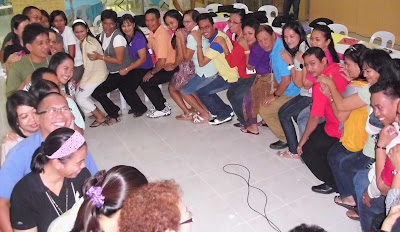
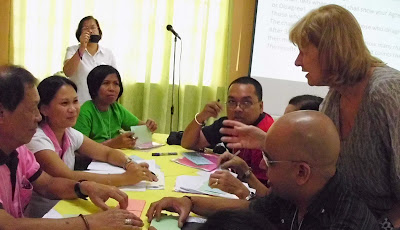
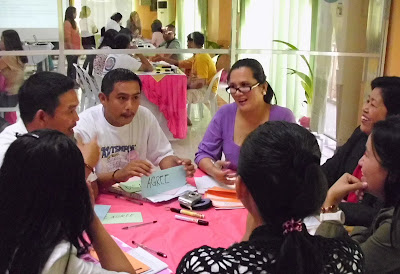
On August 1-3, 2013 in Cagayan de Oro City, Philippines, the Asian Women in Co-operative Development Forum (AWCF) convened the "Capacity-building on Mainstreaming Gender Equality in Co-operatives through the Gender Equality Resource Center (GERC)" event. The gathering put together women and men participants from GERCs from co-ops located in the Philippine island groups of Luzon, Visayas, and Mindanao. The event was held under the AWCF Project "Sustaining Gender Equality Among Co-operatives in the Philippines," supported by the We Effect-Swedish Cooperative Centre (We Effect-SCC), with fund support from the Swedish International Development Cooperation Agency (SIDA). Host-organization of the event was the MASS-SPECC Cooperative Development Center (MASS-SPECC), with a study-visit hosted by MSU-IIT National Multi-purpose Cooperative (MSU-IITNMPC) in Iligan City, Philippines.
Showing posts with label swedish cooperative center. Show all posts
Thursday, August 8, 2013
Strengthening GERCs in Philippine co-ops
Saturday, June 8, 2013
Co-ops and Families: Stronger with Gender Equality!
Sunday, August 12, 2012
Co-ops give update for GE Project
On July 25-26, 2012 in Antipolo City, Philippines, the Asian
Women in Co-operative Development Forum (AWCF) convened the “Third
Monitoring Forum” of the "Promoting Gender Equality Among Philippine
Co-operatives" Project. AWCF is implementing the Project (2010-2012)
under the “Advancing Civic Capacities for Effective and Sustainable
Services to the Poor (ACCESS to the Poor),” which is the country program
for the Philippines of the Swedish Cooperative Centre (SCC), with
funding from the Swedish International Development Cooperation Agency
(SIDA).
Representatives of the 15 Philippine co-ops taking part in the
AWCF-SCC Project attended the Monitoring Forum. They presented updates
of the Project’s implementation in their respective organizations. The
co-ops were represented by their General Managers/Chief Executive
Officers, Board Chairpersons/Directors, Chairpersons/Members of their
GE Committee, and some Gender Focal Persons (GFPs) (31 co-op
representatives: 21 women and 10 men). Also present at the event, upon
invitation by the AWCF, were the SCC Philippine Country Director Ms
Anneli Leina (who was to leave her office in early August 2012), Ms
Jessica Soto (Ms Leina’s successor), and Administrative staff Mr. Jun
Gandingan. Representing the AWCF Secretariat were Officer in Charge
(OIC) Ms Salome Ganibe, AWCF-SCC Project Manager Ms Emma Nieva, and
Project Assistant, Ms Teresa Saliendra. Some of AWCF’s consultants were
also present in the Monitoring Forum.
The GE Project
AWCF’s Gender Equality (GE) Project with SCC began with the signing in April 2010 of the Memorandum of Understanding (MOU) between the 15 co-ops and the AWCF to work for the Project Objective of strengthening local capacities and creating favourable policies for the promotion of GE among these co-ops, located in the country’s Luzon, Visayas, and Mindanao regions. From thereon, AWCF and the 15 co-ops together engaged in interventions related to human resource capacity-building; strengthening of plans, systems, and structures; research and policy advocacy; and project planning, monitoring and evaluation/capacity-building. Through these interventions, the Project intended to solidify the gender-related services and advocacies to be systematically offered to and participated in by co-ops. In turn, the co-ops were expected to be assisted in their transformation into being gender-fair co-ops and gender-fair workplaces. And being gender-fair, the co-ops were hoped to more effectively implement gender-related activities that will enable the promotion and practice of GE in the organizational areas of people, policies, systems, and structure.
Talking about accomplishments
The GE Project
AWCF’s Gender Equality (GE) Project with SCC began with the signing in April 2010 of the Memorandum of Understanding (MOU) between the 15 co-ops and the AWCF to work for the Project Objective of strengthening local capacities and creating favourable policies for the promotion of GE among these co-ops, located in the country’s Luzon, Visayas, and Mindanao regions. From thereon, AWCF and the 15 co-ops together engaged in interventions related to human resource capacity-building; strengthening of plans, systems, and structures; research and policy advocacy; and project planning, monitoring and evaluation/capacity-building. Through these interventions, the Project intended to solidify the gender-related services and advocacies to be systematically offered to and participated in by co-ops. In turn, the co-ops were expected to be assisted in their transformation into being gender-fair co-ops and gender-fair workplaces. And being gender-fair, the co-ops were hoped to more effectively implement gender-related activities that will enable the promotion and practice of GE in the organizational areas of people, policies, systems, and structure.
Talking about accomplishments
Before
the 15 co-ops had their turn in reporting to the body the progress of
their GE-related activities for the past 12 months, Ms Nieva gave a
summing up or overview of the accomplishments of the Project since
January 2012. She gave the following Project highlights:
- the 15 co-ops’ aggressive promotion of GE in their organization, with the coordination of AWCF in some activities, resulted in significant increase in the awareness on GE, and more positive perception by the co-ops’ leadership and management with regard to addressing the needs and rights of the members
- the 15 co-ops’ positive actions toward formulating and implementing gender-responsive and gender-fair policies/practices have brought forth these key results in the co-ops: formulated GE vision, mission, goals, and objectives; improved organizational structure, personnel policies (including GE-enhanced human resource policy manual, and GE manual); and improved services to address the needs of women and men members
- as to the quantitative indicators aimed at by AWCF’s GE Project, which are number of women-officers in the boards of these co-ops increased by 20%; at least 50% of these co-ops’ staff are women; and number of women members in these co-ops increased by 20%, the following results were achieved, so far, by the 15 co-ops (see Table 1 below):
- the Project capacitated the co-ops to prepare policies to ensure that women and men are always represented in the leadership: the increase in women’s number in the BOD composition indicates that women are given more opportunity to become leaders and to take part in the co-ops’ decision-making process
- the co-ops were able to identify a total of 15 GFPs, 15 alternate GFPs, and 35 gender role models/advocates, all of whom have undergone orientation on GE as the Project was able to help them be gender-sensitive; be capacitated to develop their own co-ops’ gender training modules and materials; and, most importantly, be trainers able to conduct GE-related training
- 10,816 participants from the 15 co-ops participated in 24 different roll-out GE- related training conducted by these co-ops’ GE Committee, GFPs, and gender role models/advocates
- the co-ops formed and instituted their GE programs; prepared their GE training modules; and integrated GE learning/sessions in their regularly conducted pre-membership education seminars for prospective members, and in their ownership seminars and other activities for members
- as indicated in record sheets of the 15 co-ops compared to results of the baseline study that AWCF had conducted among them at the start of the Project, these co-ops overall greatly improved in their efforts to mainstream gender in their organizations.
Challenges remain
Ms Nieva also stated the challenges that the 15 co-ops and also AWCF are facing in their gender journey, in relation to the Project and even beyond. Some of these challenges are:
- intensive learning for the co-ops on setting up in their organizations a project implementation, monitoring, and evaluation (PIME) system for GE
- need for the co-ops to train more GE trainers to reach the big number of membership
- need for the co-ops to have continuous gender-sensitizing activities/training, especially for incoming/new officers because leaders change periodically in co-ops; the same activities/training should also be given to staff/new staff
- need to address rural women’s demands on addressing their lack of knowledge and skills on business and enterprise development as well as on other livelihood projects, and developing these into family enterprises.
Co-ops update on progress
The aforementioned accomplishments for the GE Project reported by Ms Nieva found validation in the updates given later by the 15 co-ops’ representatives in the Monitoring Forum for their Project-related activities. In acknowledging the reports that lasted the whole two days of the Forum, Ms Ganibe underscored to the body the highlights of the co-ops’ presentations as the additional notable major accomplishments of the GE Project, such as:
- the growth of the co-ops in their ranking from having low scores (or even “zero” for some co-ops) in the GE rapid assessment survey conducted among them at the Project’s start—currently, (in the Project’s third year) the co-ops have moderate to almost full ranking in the different components of the assessment survey. The improvement in ranking comes from the efforts of the co-ops themselves aside from the personal efforts given by the co-operators who have undergone the different capacity-building activities of the Project (directly or in roll-out activities/training).
- the co-ops are now enlarging their GE advocacy as they reach out to even more members, and even extending and sharing their GE expertise with other organizations like local government units (LGUs) and non-government organizations (NGOs), among other organizations
- with the budget for GE having been approved by the co-ops’ Boards, the co-ops are doing many more gender-related activities such as continuing the GE education given to much more numbers of members
- the co-ops, in general, have put in place the appropriate systems to enable their GE program’s sustainability and continuity. As such, the GE program will continue to exist despite certain factors that may otherwise affect it such as leadership and staff changes. For instance, a co-op’s GE Committee has been made in-charge of the GE program, and the GE Committee has been made a standing committee of the co-op; a co-op’s GE resource center (or GERC, with the GE program operating with it) has been put under the Business Development Services (BDS) of the co-op, with the BDS being part of the co-op’s structure; or a co-op has tasked its Human Resource Department to take care of the GE program. These are just some of the ways by which the 15 co-ops have institutionalized the GE program/advocacy in their organizations.
- the co-ops’ clear delineation in their structures/systems of their GE Committee, GFPs, and gender models/advocates have helped strengthen their GE resource services. Furthermore, a number of these co-ops have leveled up by starting to establish their GERC, after securing their Boards’ approval of their GERC’s plan and budget (Note: The co-ops’ establishment of the GERC or, at least, the strengthening of the co-ops’ GE resource services, was discussed during a national forum on the GERC that had been held by the 15 co-ops, as organized by the AWCF in line with the GE Project’s objectives, in June 2012 in Cebu.)
- whereas there was not even a mention of the co-ops’ possible linking up with LGUs when the AWCF GE Project was just starting in 2010, now some of the co-ops have established partnership with their LGUs. For instance, the LGUs are now tapping a number of these co-ops as GE experts who render GE services, such as by being the LGUs’ trainers or resource speakers. The co-ops may not be earning largely from their partnership with the LGUs at this point, but the benefits for the co-ops from this partnership are manifold. With the co-ops’ additional experience and exposure gained from working together with the LGUs, they further firm up their reputation as both co-op and GE experts. Also, with the co-ops’ tie-up with the LGUs (which are mandated to have a gender budget), they are able to conduct GE training in different barangays (villages) that give them more opportunities to reach the co-op members as well gain more members.
- in relation to being tapped as GE experts by LGUs and other organizations, the co-ops have gained recognition and awards for their expertise
- the 15 co-ops, located in different areas of the Philippines, have established “friendships” among themselves as they share learning, experience, and efforts in helping and supporting one another in simple GE-related partnerships (e.g., conducting GE activities)
- one of the manifestations of the increased importance given by the co-ops to GE is their development and offering of products/services accessible to both women and men members, even if these products/services were initially offered to women only. Thus the co-ops have become gender-fair by giving access to both sexes to these products/services. For some of the co-ops, this situation has even led to the increased number of both women and men membership.
- the co-ops have also shown in a variety of ways that the BDS and GERC within their organizations can be integrated together to maximize social and economic benefits for both co-ops and members (e.g., integrating GE education in the members’ activities like livelihood training and loan seminars) (and which also puts to fore the co-ops’ “corporate social responsibility”)
- with all their commitment, activities, experience, expertise, and recognition gained in and through GE, the 15 co-ops are now able to proudly say that they are “GE Champions” in the Philippine co-op movement.
Joint activities
The Monitoring Forum ended with discussions between AWCF and the 15 co-ops on their remaining joint activities of the Project for 2012 as well as on the continued promotion and establishment of the GERC among the co-ops and also with other co-ops in the Philippines. SCC’s Ms Leina expressed her organization’s continuing support to the co-ops for their GE endeavors.
The 15 partner-co-ops in the AWCF-SCC Project for GE are (Luzon) Abra Diocesan Teachers and Employees Multi-Purpose Cooperative (MPC); Ligas Kooperatiba ng Bayan sa Pagpapaunlad; Nueva Segovia Consortium of Cooperatives; St. Martin of Tours Credit and Development Cooperative; and Sacred Heart Credit and Development Cooperative; (Visayas) Don Bosco Network MPC; Cordova MPC; Dumanjug MPC; Lamac MPC; and Metro Ormoc Community Cooperative; and (Mindanao) Mindanao State University–Iligan Institute of Technology MPC; Paglaum MPC; Panabo MPC; Pantukan Chess Club Cooperative; and Tagum Cooperative.
Friday, December 24, 2010
Gender experts build capacity in AWCF-SCC workshop


Identifying techniques in forwarding advocacies and mainstreaming gender in co-ops. Knowing the importance of storytelling as an essential tool in advocacy. Developing training modules and identifying methodologies useful in the conduct of training.
These were among the learning for 35 gender focal persons (GFPs), and gender trainers and advocates who took part in the “1st Capacity Building Workshop” held under the “Promoting Gender Equality Among Co-operatives in the Philippines” Project, October 19-21, 2010, in Hidden Valley Resort, Lamac, Pinamungajan, Cebu province. The Project is being implemented by AWCF and the Swedish Cooperative Centre (SCC) as part of SCC’s Philippine country programme for 2010-2012, which is the “Advancing Civic Capacities for Effective and Sustainable Services to the Poor (ACCESS to the Poor)" Programme. The Swedish International Development Cooperation Agency (SIDA) provides funding support. The Lamac Multi-Purpose Cooperative (LMPC) owns and manages the Hidden Valley Resort.
The Project contributes to the Programme clusters on organizational development/capacity building and on advocacy and networking. The Project objective is to strengthen local capacities and create favourable policies for the promotion of gender equality (GE) among co-ops in the Philippines, to benefit 15 co-ops in the Philippines’s three island groups of Luzon, Visayas, and Mindanao.
The October Workshop was the first of the Project’s series of capacity-building activities to enable participating co-ops’ GFPs, and gender trainers and advocates to deepen knowledge and skills on GE, and also to enhance their communication and facilitation skills in conducting gender training in their respective co-ops; and to develop gender training modules suitable to co-ops’ needs.
Ms Bonnie Bërnstrom, Gender Consultant of SCC from Sweden and one of the Workshop facilitators, introduced various techniques in forwarding advocacies and mainstreaming gender in co-ops.
She informed the participants about some legally binding international declarations that promote and sponsor GE as a cause, such as the Beijing Platform for Action (BPFA), the Convention on the Elimination of All Forms of Discrimination against Women (CEDAW), and the Millennium Development Goals (MDGs). The learning from this session will strengthen the participants’ platform or basis in forwarding the GE advocacy.
Ms Bërnstrom also made the participants compare the Gender Gap Index between Sweden and the Philippines, and to assess the areas of strength and weakness of the two countries in terms of politics, economics, education, education and training, and maternity and childbearing.
To focus on what is and how GE advocacy should be promoted, Ms Bërnstrom discussed the value of the core message, the use of “handbreaks” or learning when and when not to say something, and process questions that create better understanding of people with different worldviews and to explicate the underlying reasons of a person’s belief or disbelief of a concept or an issue.
Ms Bërnstrom also stressed the importance of storytelling as an essential tool in advocacy. How stories, as a combination of facts and emotions, send the message across and how they appeal to people of different culture and orientation.
Meanwhile, the Workshop’s session on developing training modules and identifying methodologies useful in the conduct of training was facilitated by Ms Salome Ganibe, Executive Director of AWCF. The session’s outputs were a) development of different training modules on GE; b) enhanced use of different training methodologies, such as role plays, buzz sessions, group discussions, and storytelling; and c) listing of various unfreezing activities and their description.
As the Workshop exemplified participation and teamwork, daily host team-members co-managed the day and evening social activities to perk up the learning sessions.
Important guests accentuated the Workshop’s significance. Pinamungajan Mayor Geraldine Yapha graced the opening program, and LMPC Chairperson Delfin Tuquib and Lamac Parish Priest Fr. Dennis Acedo were present in the closing program.
The next capacity-building workshop of the AWCF-SCC GE Project is slated for the first quarter of 2011.
Tuesday, July 13, 2010
AWCF 5th GA: Improved Direction, New Member and Officers
The “AWCF 5th General Assembly (GA)” was held on June 5, 2010 at the Paco-Soriano-Pandacan Hall, NATCCO Bldg., Quezon City, Philippines. NATCCO or the National Confederation of Cooperatives, AWCF’s member in the Philippines, hosted the event. The GA had two delegates each from the AWCF regular members NATCCO, Center of Agricultural Extension Volunteers (CAEV) of Vietnam, Credit Union League of Thailand (CULT) of Thailand, Credit Union Promotion Club (CUPC) of Malaysia, and Forum for Indonesian Co-operatives Movement (FORMASI Indonesia) of Indonesia. Non-voting delegates came from AWCF associate member Socio-Economic Development Organization of Cambodia (SEDOC). But as SEDOC had expressed, prior to the GA meeting, its desire to be a regular member in AWCF, especially since it had already passed the two-year associate membership requirement of AWCF’s Bylaws, the GA approved SEDOC’s regular membership later in the meeting.
AWCF Chair Ms Kruewan (left) presiding over the AWCF General Assembly with Treasurer Dr. Toan.
In her report to the assembly, AWCF Chairperson Ms Kruewan Chonlanai of CULT highlighted AWCF’s activities and outputs, and learning and insights gained, for the period August 2007-June 2010. AWCF Treasurer Dr. Bui Quan Toan of CAEV also presented to the GA the comparative financial performance report of AWCF from 2007-2009. In her Secretariat’s report, AWCF Executive Director Ms Salome Ganibe updated the GA on AWCF activities in January-May 2010, such as on the organization’s projects with the Swedish Co-operative Center (SCC)—“Promoting Gender Equality Among Co-operatives in the Philippines”; MISEREOR—“Poverty Reduction and Empowerment of Women through Enterprise Development in CVL Countries”; and Fredskorpset-Norway—“Capacity-building for Gender and Co-operatives in Asia.”SCC's Ms Anneli facilitating the Octagon assessment for AWCF.

The GA meeting was preceded the day before by the “Octagon Assessment Workshop” participated in by the GA delegates and the Secretariat. Ms Anneli Leina, Program Coordinator of SCC, facilitated the workshop, which was held also in the NATCCO Bldg. The workshop aimed at letting the participants see a big picture of AWCF by looking at the various aspects of the organization, using Octagon as the assessment tool. The results were to become inputs to the next day’s GA, and will also be used as a baseline information of AWCF in its three-year project with the SCC.
The Octagon, developed by the Swedish International Development Cooperation Agency (Sida), assesses the “strengths and weaknesses in non-government organizations (NGOs).” It is based on the idea that a comprehensive picture of an organization’s capacity and development profile can be obtained through systematic reviews and assessments of four basic aspects of that organization. The Octagon also helps identify necessary measures to improve the organization’s capacity to perform effectively (see more information below about the Octagon).
GA approves resolutions
The workshop participants’ assessment of AWCF resulted to an overall “Good” assessment level, using Octagon’s seven-point scale. A few months before this workshop, the AWCF Secretariat also used the Octagon to assess the organization, and a “Very Good” assessment was obtained then. Taken together in this June workshop, these results were used to formulate action points in areas for improvement in AWCF toward enhancing the organization’s functioning and outputs.
Resolutions were drawn out from the action points, and these were presented at the GA the following day. The GA adopted the resolutions, to form part of AWCF’s strategic direction for 2010-2013, that embody various issues concerning AWCF, which are:
1) organizational base
2) output
3) capacity
4) competence
5) systems and finance
6) relations.
AWCF’s action toward these issues and concerns will include, among other steps, more intensive information dissemination about AWCF within its network; increased consciousness, commitment, and action of AWCF members as to gender programs in their organizations; further strengthening and implementation of activities, taking into account the AWCF Vision; enhancing competence and capacity of the AWCF Secretariat and officers; increasing financial sustainability through internal funding and self-sustaining activities; and strengthening and expanding relations within the AWCF network and with other networks.
New member, new officers
The GA delegates’ agenda-packed meeting that lasted from early morning to mid-afternoon included also the approval of the AWCF Plan and Budget for year 2010, which the AWCF Board of Trustees (BOT) also had approved months earlier. The GA likewise took up the matter of associate member SEDOC’s application as a regular member. The GA’s approval of SEDOC’s regular membership thus brought to six the number of AWCF’s member-organizations.
Finally, on the matter of electing the AWCF’s BOT for 2010-2012, each AWCF member-organization was asked to identify its official representative to the BOT. Having identified the composition of the BOT, the GA closed its meeting to pave the way for the election of officers to the different BOT positions, to be presided over by the AWCF Election Committee.
New AWCF Board of Trustees (BOT) and Election Committee (EleCom) take a moment for posterity: (seated, from left--BOT) Dr. Dr. Bui Quang Toan, Ms Papathiamah d/o Alagadora, Ms Kruewan Chonlanai (President), Ms Emma Nieva, and Mr. Mudaris Ali Masyhud; (standing, from left--EleCom) Ms Anik Dwi Martuti, Mr. Sil Vineth, and Ms Sylvia Paraguya.

The Octagon tool used
The Octagon assessment tool used by the AWCF participants prior to the GA is designed to assess the strengths and weaknesses in NGOs. Sida started to develop the Octagon in 1999, launching it in 2001. The tool can be used by both Swedish organizations and their partners in cooperation. It is based on the idea that a comprehensive picture of an organization’s capacity and development profile can be obtained through systematic reviews and assessments of an organization’s four basic aspects, which are:
1) objectives and management/administrative structures (organizational base)
2) activities with or for selected target groups (i.e., output)
3) capacity to succeed in its work (refers both to its professional skills and the funds at its disposal as well as its administrative systems)
4) capacity to create and maintain relations with its target groups and other actors in civil society.
Aside from being a tool for rapid and simple analysis of an organization’s strengths and weaknesses, the Octagon also identifies necessary measures to improve its capacity to perform effectively. If the same type of analysis is made systematically on several occasions over several years, it is also possible to follow changes in the organization in question. In this way, the Octagon can be used both for “baseline studies” and for measuring changes and results of internal organization development over a certain period of time. The Octagon allows the analysis of an organization’s four basic aspects with the aid of eight variables: (organization base) Identity, Structure; (organization’s activities–output) Implementation of activities, Relevance of activities; (organization’s capacity development) Professional skills, Systems; and (organization’s relations) Acceptance and support of target groups, Relations with its external environment.
Each dimension is ranked by assessments of two statements/questions on a one-to-seven point scale (Non-Existent, Very Weak, Weak, Reasonable, Good, Very Good, Excellent). When all the variables have been analyzed and ranked, the average points are transferred to an Excel document where the organization’s development profile is illustrated in the form of an octagon.
AWCF participants busily answering the Octagon assessment tool.


Subscribe to:
Posts (Atom)